


The concept of ‘tribalism’ (a human universal, or a quality possessed by all members of the human species) must be broken down into its constituent parts.
The term does not denote a purely biological characteristic, but rather a behaviour that has exerted evolutionary pressure on our species and co-evolutionary pressure on human-altered habitats. [i]
I have examined tribalism based on two opposing yet complementary modes of expressing its ‘extended phenotype’. This involves us all insofar as we are bio-psychological beings subject to environmental and social influences, migration, ‘ethnic fusions’, cultural cross-fertilisation, and acts of war. Generally speaking, we are subject to ecological pressure that binds individuals to the dynamics of a system comprising plants, animals, microorganisms and inanimate objects. These elements shape the concept of nature, upon which we base the qualities we define as the environment, as well as the idea of the individual with free will who interacts with their fellow human beings. They also shape the meaning we ascribe to the group to which we belong, to institutions, to the homeland, to the nation, to the government, to freedom in the negative sense (freedom from interference and coercion) and to freedom in the positive sense (self-mastery over one’s own capacity to be and to act). [ii]
The analysis draws on two behavioural models that can be distinguished conceptually.
Prosocial homophily refers to the tribalism that develops among people who share similar values and feelings of closeness, empathy, compassion, loyalty and trust.
It facilitates interaction, interdependence, cooperation, solidarity and harmony with other members of the family and the ‘tribe’, and various scholars have suggested that it promotes the survival of the group’s offspring.
I provide examples of situations in which cooperation benefits those who practise it, drawing on game theory and contemporary experiences.
Prosocial homophily is a human orientation that has developed through evolutionary processes. The difference between social animals, such as chimpanzees, and humans is that we have developed ethical principles, moral rules, religious and cultural attitudes, and specific languages, inherited wisdom, social institutions, and ‘operant conditioning’, which operate to bring about a form of ‘natural selection’ of individual behaviours and , possibly, those of entire nations. As these always involve adaptation to the environment, they tend to mitigate discriminatory behaviour within the social organisation, though they can also operate in the opposite direction.[iii]
At the opposite extreme lies what I call discriminatory or predatory tribalism. This category can be used to explain certain processes, as well as social dynamics’ degenerations.
I define discriminatory tribalism as the consequence of ‘dehumanising’ practices. [iv]
Group members use it to assert their dominance over others by exercising ruthless oppression, which may take the form of manipulation, psychological coercion, blackmail or violence, in order to impose their supremacy and consolidate their dominance, which often takes on the characteristics of racism.
The more than fifty wars taking place worldwide in 2026 are all examples of this behaviour.
I am referring to aggressive, hostile, demeaning and persecutory behaviour that prioritises the ‘exclusive’ interests of one party over another or society as a whole within specific social networks. I apply the label ‘discriminatory’ when tribalism expresses an abuse of power by a government, powerful group, lobby, social class, professional group, political party, army, multi-billionaire, ideological or religious doctrine, dominant figures or certain individuals.
It manifests itself when barriers are erected that preclude self-determination, social inclusion, economic freedom, freedom of expression and free movement, particularly of human beings. It is also evident when it characterises the intimidating actions of an established power aimed at subjugating the will of those who would gladly do without it, and when it is expressed by ‘traitors’, ‘opportunists’ and ‘free riders’ who take unfair advantage of others. However, this does not mean that the silent or active majority, disadvantaged groups or other minorities are free from discriminatory tribalism or prejudices, shortcomings, errors or illogical claims.
Both prosocial homophily and discriminatory tribalism are behaviours observed in certain social animals, such as chimpanzees. In these species, females may mate with several different males to ensure that their offspring are not killed by males who do not recognise their paternity. This strategy can also be explained by the dual aim of prioritising the survival of our ‘selfish genes’ and protecting ‘those like themselves’ from ‘those who are different’, by triggering the processes that evolutionists refer to as parental selection and group selection.
In fact, it is not possible to draw a clear line between the different types of tribalism as they are characterised by ‘porous’ boundaries and shifting balances with one another.
Various methods can be employed to evaluate the extent and manner to which the tribalism of a ‘dominant’ group may have discriminatory effects on ‘dominated’ groups. Examples include incisive analyses of ‘universal values’ (as recorded by the World Values Survey), the Freedom Index, or expressions relating to economic freedom, democracy, transparency, corruption, violence against women, economic inequalities, hate speech and, at the opposite extreme, the language of peace (the least studied).
Furthermore, it is misleading to assign moral judgements to behaviours observed in nature when they are transposed onto the principles of civil coexistence. It is also misleading to attribute labels of ‘good’ or ‘bad’ (relating to the concepts of good and evil) to types of tribal behaviour. This is despite authors such as Nicholas Wade, Francis Fukuyama and Daron Acemoglu arguing that ‘nations fail’ when such behaviour prevails, resulting in ‘extractive societies’ rather than ‘inclusive societies’.
The main factors preventing humanity from bringing about a paradigm shift that would overturn the prevalence of violent and oppressive attitudes over cooperation and altruism are: a) anthropocentrism (the idea that humans are masters of the universe), which justifies the unsustainable exploitation of natural resources and leads to the ‘consumption of the planet’, already altering – and continuing to alter – natural balances with extremely heavy human costs; b) persistent discrimination against women, which, despite slow progress in some civilised countries, creates a disparity manifested in various ways and degrees of severity from which all other inequalities stem. This perpetuates cultural models incapable of bringing about positive processes towards equity; (c) The deployment of vast resources towards more or less overt forms of ‘war economy’, in which the technologies produced by each developed country are pitted against one another in a competitive, stock-market-listed system. The aim is to create the deadliest and most ‘cost-effective’ instruments of death, among other things. Such investments generate expectations among the banks and investment funds that we all depend on to some extent, and they share responsibility for the outbreak of armed conflicts. In scenarios of war, the stock prices of the military–industrial complex are consolidated, as are the power of the military ‘castes’ and their apparatus, the authority of the government in power – which, by necessity, becomes illiberal – and the prevalence of corruption and organised crime. Furthermore, lives are ‘wasted’, education, fertility and the civic development of younger generations are hindered, and all of this is justified as if it were a ‘side effect’ due to a biological necessity or destiny assigned to us by God.
In this context, western civilisation – which undoubtedly has ‘hard-won achievements’ and which gave rise to the idea of modern democratic organisations – is not synonymous with prosperity, equity, ‘moral’ (or even ‘racial’) supremacy, ‘ethical’ finance and technology, or the welfare State. On closer inspection, for some 500 years now – and for who knows how much longer – its supremacy has manifested itself above all in terms of ‘value chains’ in the sectors of industrial production, technology (today, in particular, ‘digital’ technology), transport, trade and armaments.
A number of authors cited in the essay argue that, in this situation, democratic practice undergoes an ‘auto-immunising’ drift, a discriminatory and authoritarian drift, the main beneficiaries of which are those who gain money and power through the assertion of the ‘human capital’ paradigm which, in the sense of ‘entrepreneurship of one’s own destiny’, is legitimised and exploited by technology-driven neoliberalism and neoconservatism.
By implementing ruthless and devastating forms of predatory tribalism, they achieve their aims through ‘the egalitarian right to inequality’, the surveillance and conditioning of individual behaviour and public opinion; disinformation and propaganda; the promotion of ignorance and a ‘fear of the State’ which justifies the defunding of public spending, social disengagement, and the myth of ‘boundless wealth’ – which (in theory, attainable by all) in fact rewards only a very few ‘chosen ones’, the spread of hate speech and anti-science sentiment, the exacerbation of generational conflict and all the other ‘tools’ at their disposal.
In my view, against the backdrop of the ‘polycrisis’ that we are witnessing in the 21st century,[v] neoliberalism aims to subject us to illiberal, plutocratic, kleptocratic, theocratic and warmongering regimes, in addition to the accumulation of immense capital in the hands of a few ‘tycoons’.
My (catastrophic) prediction is based on an analysis of the economic and technocratic models that currently shape the policies of key players in geopolitical circles such as the G7, G20, BRICS, PIGS, the Silk Road and the ‘Board of Peace for Gaza’. During the 2026 World Economic Forum, US President Donald Trump declared his wish to lead the Board for life, as he believes the UN is ‘insufficient’ and ‘of little help’. [vi]
Focusing first on the environmental and climate crises, it is clear that they have been caused by the use of non-renewable natural resources, consumerism driven by the need to maximise market size and profit, and the idea that exploitation and pollution can be attributed to ‘optimal values’, with the damage caused being remedied by ‘innovative solutions’. If one were to give credence to the ‘brilliant’ Elon Musk, the solution would be for everyone to take refuge on Mars aboard his spacecraft.
Contemporary societies are not condemned to ‘primitive barbarism’, although it is not easy to free oneself from behaviours that may be regarded as a legacy of those typical of hunter-gatherer tribes. They can interact by employing democratic methods to mitigate conflicts, involving stakeholders in decision-making and countering cultural stereotypes of innate aggression. They can also develop an awareness-raising and educational process based on the premise that armed deterrence does not prevent wars. Through actions aimed at replacing the paradigm refuted by today’s reality, it asserts: ‘If you want peace, prepare for peace’. [vii]
A significant section of the essay explores arguments concerning European philosophy, which has shaped its own destiny by grounding its principles in the ‘I subject’, [viii]the foundation of scientific reductionism and mechanistic thought. These approaches have had significant consequences within ‘Western culture’, giving rise to the autonomy of the individual, ‘subjective reason’, and the liberal conception of ‘positive freedoms’ of being and doing. This logic has fostered the supremacy that Western countries have achieved over the last five hundred years. This has come about in part through the use of technologies that have fuelled the production of ever more powerful weapons, colonialism, the accumulation of vast capital, the exponential growth of financial returns, soft power, and finally, almost as an afterthought to economic objectives, ‘health’ as a common good.
In the second half of the 20th century, this trend was fostered in the ‘West’ (and particularly in Europe following the Second World War) under the protective wing of the so-called ‘Pax Americana’ and the associated political compromises. This led to the growth of political systems based on social democracy, the rule of law and the welfare state, which, to paraphrase Winston Churchill, are the ‘worst form of government, except for all the others’.
This is all taking place against a backdrop of the recession of democracies and is being undermined by the (as yet unproven) notion that economic development, the ‘stature’ of a geopolitical power, national security, social control, quality of life and even ‘lasting peace’ are guaranteed by autocratic and isolationist regimes. In my view, the proliferation of mutual military assistance treaties among nationalist governments is a precursor to the deployment of military alliances ‘on the ground’. Far from guaranteeing stability and peace, they will be no more effective than a UN reform aimed at granting those countries lacking a nuclear arsenal and not members of the Security Council or within the spheres of influence of any of its member states a say in the ‘globalised’ development model. It is in this context that the interesting topic I am exploring arises: so-called ‘Eastern despotism’. [ix]
Based on significant comparisons, I have identified areas for consideration from the contrast between Western and Eastern perspectives, as well as the realisation that these two ‘schools of thought’ are more closely related and intertwined than centuries-old chauvinism and current nationalist propaganda would suggest.
In any case, predatory tribalism becomes increasingly entrenched and pervasive in social structures the further one moves away from the rule of law. Conflicts of interest and ‘abuses of office’ are tolerated more readily, and there is a greater tendency towards embezzlement, influence peddling, vote-buying and a focus on the interests of dominant power groups. This takes root in intermediary bodies, redundant and contradictory legislative provisions, national civil and criminal codes, and international treaties. A lack of legal certainty opens the door to the rhetoric of interpretation and the opportunism of arbitration or court rulings, which once again favour the most powerful.
The parameters considered in the ‘work plan’ are numerous, and I will mention the following: a) the types of actors in whom behaviours attributable to pro-social homophily and discriminatory tribalism prevail; b) the structures and operational tools that characterise ‘communal’ and ‘immunitari-an’ logics within human communities; c) managerial styles, namely absolute ‘powers’ and/or symmetries/asymmetries observed between the roles involved in these distinct connotations; d) ‘validating’ technologies; e) ‘relational and decision process degeneration’; f) the trust (or lack thereof) placed by each citizen in those in power, institutions, science, and public services from which they benefit within a given political or administrative sphere of competence.
Within this framework, an analysis is developed of certain social phenomena relevant to our times. These phenomena involve the manipulation of public opinion and politics through a detestable ‘infodemic’, fuelled in particular by the unscrupulous economic and political interests of social media platform operators.
In an age in which, to paraphrase Walter Benjamin, every intellectual work is subject to ‘technical reproducibility’, as well as political or digital surveillance of culture, habitus, and the meaning we ascribe to reality, I hope to imbue the arguments of this essay with an engaging aura. This aura is created through the interplay of theory and practice, and relies on a process that requires rigorous intellectual engagement and concrete actions to fulfil both individual and ‘communal’ objectives.
In this scenario, everyone is a participant in subjective and social ‘contemporaneity’, responding not only to a one-way message, but also to ethical and aesthetic principles shared with the audience, as happens on a theatre stage. The totality of initiatives, gestures, feelings, questions and answers characterises the identity-based, symbolic and relational representation that each of us establishes with others.
In his book 1984, George Orwell prophesied a situation comparable to the contemporary landscape in which neoliberalism and neoconservatism drive people towards selfishness, mistrust, and ruthless competition against one another. In the novel, Orwell identifies victims of a dictatorship with horrifying characteristics amongst the masses of the downtrodden violated by the absolute power of ‘Big Brother’, a dictatorship marked by an inhuman brutality with which we are all too familiar. Indeed, we need look no further than the massacres of defenceless civilians – the victims of so many wars – to see this reality.
It is worrying that this form of ‘radical hegemony’ has also been using artificial intelligence (AI) for several decades now to identify, locate, judge and make predictions based on a supposed ‘normality’; to standardise thought, censor, indoctrinate and rewrite history.
For Homo sapiens, it is a disgraceful fate to be reduced to Homo oeconomicus.
This is undoubtedly the case for the Enlightenment ideal of ‘magnificent and progressive destinies’, and for the assumptions that led to the declaration of the ‘end of history’. China’s accession to the WTO treaty (which occurred almost simultaneously with the attack on the Twin Towers and the start of the wars against ‘global terrorism’) was touted as an opportunity to set in motion processes of globalisation and international collaboration capable of sustaining progress, reducing inequalities, and providing latent conflicts with the ‘sedative’ offered by the free market.
However, in light of the wars of the last twenty-five years, 2001 marked the beginning of the ‘piecemeal world war’ spreading across the globe like the uncontrollable wildfires resulting from climate change.
Nevertheless, I believe that we can free ourselves from oppression and abuse by ridding ourselves of ‘destructive instincts’. The situation we are currently experiencing is just one of the many challenges humanity has faced, overcoming them through behaviour that, however short-sighted or unwise, has ultimately led to new milestones in civilisation.
For this reason, my arguments conclude with the following: on the one hand, the predominance of predatory tribalism has reached its peak and must be followed by a new beginning to curb it; and on the other hand, we must learn from history’s mistakes and take concrete action based on the ethical and moral principles of fairness, inclusivity, tolerance, cooperation, and ‘love’ for oneself and one’s neighbour. This will offer younger generations viable alternatives to the multiple crises they have inherited. I therefore set out a programme of action aimed at contributing to a ‘humanistic and communicative renaissance’, the objective of which is to foster a ‘sense of community’.
This programme outlines a project to create a community of individuals utilising an AI-based system designed to spread a ‘language of peace’.
I believe that the prospect of freeing ourselves from the fate of war is still within our reach. This can be achieved by developing democratic, free, cosmopolitan, multi-ethnic, multicultural and multi-religious societies, in which the ethical and ecological values of prosocial homophily prevail universally.
The Author.
TRIBALISM
Bio-psycho-social and ecological origins of the delicate balance between cooperation and abuse of power in human relationships
Contents Part One
Chapter 1 Preface and Research Framework
Chapter 2 The social construction of reality
Chapter 3 The ‘divergence’ of Chinese language and thought from the European tradition
Chapter 4 The Western principle of ‘meaning’ and the Chinese principle of ‘coherence’
Appendix A: Some concepts that have developed in the West and China regarding the distinction between ‘meaning’ and ‘coherence’, and between the ‘sacred’ and the ‘profane’
Chapter 5: Biodiversity, adaptation to the environment, the social organisation of the human species, and natural law
Chapter 6: The convergence of discourses on tribalism, domestication, cognition, morality, and civilisation
Appendix B provides an in-depth examination of themes explored by Maturana and Varela regarding autopoiesis and the theory of mind.
Appendix C explores the topic of the non-vitalistic formulation of the nature of life.
Chapter 7: The process of categorisation, prototypical instances and their links to aesthetic sense.
In Appendix D, I present an analytical framework for the meanings of aesthetics and ethics embodied in the concepts of ‘beauty’ and ‘goodness’, and I discuss Eleanor Rosch’s contribution to cognitive science.
Chapter 8: The evolutionary process leading from cooperation to human morality.
8.1 I, we, they.
In Appendix F, I touch upon some conceptual foundations relating to biology, anthropology and ethology which underpin the social nature of human beings.
In Appendix G, I summarise some interesting facts about mimicry.
8.1.1 What characterises the social individual?
8.2 In search of the specific characteristics of social behaviour amongst human beings
8.2.1 Individual intentionality
8.2.2 Social intentionality
8.2.3 Collective intentionality
Chapter 9 Intersubjectivity
9.1 An overview of attachment theory with reference to intersubjectivity.
9.2 Formation of the attachment bond
9.3 The dimension of intersubjectivity in ritual and religious contexts
Chapter 10: Laughter as a tool for social interaction
Appendix G: An introduction to some theories of laughter
Chapter 11: Empathy
Appendix H: The neurological correlates of empathy: mirror neurons and von Economo neurons
Chapter 12: Music as an emotional unifier
Chapter 13: Parental selection
Chapter 14: Aggression as the so-called ‘evil’ according to Konrad Lorenz
Chapter 15: The prisoner’s dilemma and the ‘tit for tat’ strategy
Chapter 16: Contemporary examples of cooperation
Chapter 17: Solidarity-based cooperation, the allure of battle and the perversion of war in the light of predatory tribalism amongst humankind
Chapter 18: The infodemic as an emerging phenomenon in interconnected networks.
18.1 The flutter of the ‘infodemic butterfly’s’ wings and the social hurricane it is capable of unleashing
18.2 Electronic ‘hybrid warfare’
Chapter 19: Afterword
Appendices
Appendix A: Some concepts developed in the West and China concerning the distinction between ‘meaning’ and ‘coherence’, and between the ‘sacred’ and the ‘profane’.
Appendix B: The useful arguments of Maturana and Varela.
Appendix C: Schrödinger, Huxley and the ‘perennial philosophy’. Interpretative or narrative sources of spiritual experience
- Ethics and aesthetics are inextricably linked by ‘prototypical instances’
Appendix E: Applications of the theory of symbiogenesis to humans
Appendix F: Mimicry and biological niches
Appendix G: Mirror neurons and von Economo’s neurons: Empathy and prenoethical cognition.
Appendix I: Music as a mediator of the universality of feelings

TRIBALISM
An ethical, cultural and political proposal to promote universal tolerance and democracy through mutual altruism
Contents: Part Two
Chapter 1: Ethics and Morality: Is There a Difference?
1.1 Reciprocity, responsibility and fundamental goods in the West and the East
Chapter 2: The moral category of the good and the factual contextualisation of goodness
Chapter 3: Isaiah Berlin and the two concepts of freedom
Appendix A offers a brief digression on the ‘crisis of the immutables’.
Chapter 3.1 examines the different worldviews generated by monism and pluralism of values.
Appendix B looks at Berlin’s perspective on liberalism in political, ethical and moral discourse.
Appendix C further elaborates on Berlin’s view of pluralism.
3.2 Berlin’s approach to the major themes: justice, progress, peace, freedom and happiness for future generations
Appendix D comments on Berlin’s famous statement: ‘freedom for an Oxford professor is a very different thing from freedom for an egyptian peasant’.
3.3 The distinctive characteristics of negative and positive freedoms
Appendix E: Berlin’s argument that positive and negative freedom have historically developed in divergent directions.
Appendix F examines the relevant questions regarding which restrictions can and should be subject to some form of coercion.
Chapter 3.5: Berlin’s interpretation of the legacy of the fathers of liberalism
Chapter 4: Scientific arguments that help to better understand the meaning of free will, liberty and conscience
Chapter 5: The capabilities approach developed by Amartya Sen and Martha Nussbaum, and the perspective of fulfilling life’s needs.
Appendix G: An in-depth analysis of Amartya Sen’s view on the distinction between formal and substantive freedom.
Appendix H sets out the arguments put forward by Amartya Sen, Martha Nussbaum, and other authors on the capabilities approach.
Chapter 6: Reflections on competition, rivalry, abuse of power, cooperation, and their effects on social organisation.
Chapter 7: Hate speech in the service of populism and authoritarianism.
Chapter 8: Some examples of group dynamics.
8.1 The relationship between population genetics and the use of the concepts of ‘race’, ‘patriotism’ and ‘national character’.
8.2 The concept of ‘groupthink’ within decision-making theories
Chapter 9: Despotism and democracy, an old story
Chapter 10: There is only one form of despotism, even if it changes its guise.
10.1 A brief overview of Max Horkheimer and Theodor Adorno’s critique of objective and subjective reason.
Chapter 11: Noble ideals and social virtues. The Universal declaration of human rights
Chapter 12: Asian values and the specific characteristics of contemporary Asian societies
Appendix I: Further important aspects concerning asian values
Chapter 13: International treaties and the need for a political and legal re-examination of the relationship between the economy, human rights, patents and intellectual property in the age of big tech.
Appendix L provides details of the agreements concluded within the WTO and their negative impact on our health.
Appendix M highlights Danilo Zolo’s arguments and his conviction that geopolitical unilateralism is a ‘lost cause’, heralding the global decline of democracies.
Chapter 14: Examples drawn from Theodor Adorno and Mariana Mazzucato of a new, more ’emancipated’ model of development.
Chapter 15: The utopia of cooperative pluralism in the shadow of a ‘clash of civilisations’
Chapter 16: Caring for others is the revolution
16.1 What we owe one another: a new social contract
Appendix N: Italy is one of the world’s leading nations at risk of a social catastrophe. This largely stems from the narrow-mindedness of the baby boomer generation, which, as it ages, is robbing its children of their future.
Chapter 17: The ‘discourse of love’ in the service of universalism
In Appendix O, I compare the ‘addresses to the nation’ delivered at the end of 2025 by Vladimir Putin, Xi Jinping, Donald Trump and Sergio Mattarella.
In Appendix P, I present my translation of an article by Alexander Likhotal which discusses the ‘deep-rooted causes’ that, from Putin’s and his associates’ perspective, justify Russia’s aggression against Ukraine.
Chapter 18: An artificial intelligence model that promotes a culture of peace
18.1 The development, use, and ethical impact of AI
In Appendix Q, I highlight some useful guidelines for developing the Bella model based on AI ethics principles, following the arguments of Luciano Floridi and other authors.
In Appendix R, I analyse comments relating to the MAGA policy implemented by the Trump administration from the perspective of a hegemonic nation maintaining relations with subordinate countries.
Chapter 19: The ‘Beast’ and the ‘Bella’
19.1 The ‘bottom-up’ development of the Bella system
Appendix S describes the process of building a community of activists who share the ‘character’, the ‘spirit and group mindset’, with the aim of gaining control over information in order to foster a positive culture of peace.
Chapter 20: Resisting, educating, tolerating, living in hath
In Appendix T, I examine the role of the European court of human rights (ECHR), particularly with regard to the war crimes convictions handed down to Vladimir Putin and Benjamin Netanyahu.
Appendix U describes some significant developments characterised by the growth of grassroots movements across the world in recent decades.
Afterword: Sergio Mattarella: The international order amidst rules, cooperation, competition and new expansionism
Appendices
Appendix A
Appendix B
Appendix C
Appendix D
Appendix E
Appendix F
Appendix G
Appendix H
- 1 The conversion of goods and services into human well-being
H.2 Measuring people’s ability to do and be what they wish
H.3 Systems and methods for measuring human capabilities
H.4 Critical analyses of the capabilities approach
Appendix I
Appendix L
Appendix M
Appendix N
Appendix O
Appendix P
Appendix Q
Appendix R
Appendix S
Appendix T
Appendix U
Notes
[i] The concept of the relationship between two opposing yet complementary forces operating within an organism or society, identified by the terms ‘communitas’ and ‘immunitas’, is particularly relevant to the study of tribalism. The etymology of the former term suggests that living in a community involves giving gifts, while the latter term refers to identifying and countering anything that the individual or community recognises as ‘foreign’ and potentially dangerous, and developing mechanisms to regulate immune responses. If the organism loses control of the dynamic equilibrium that regulates immunity, for example in a condition known as ‘autoimmunity’, one or more of its organs may be damaged, resulting in systemic effects. In his essay Common immunity: biopolitics in the age of the pandemic, John Wiley and Sons Ltd (2023) argues that when community and immunity converge to an extreme degree, the life of each individual is protected only by the life of the whole community. See the chapters ‘The evolutionary process leading from cooperation to human morality’ and ‘The convergence of discourses on tribalism, domestication, cognition, morality and civilisation’ in Part One of this study.
[ii] The manifestation of tribal behaviours stems from selective adaptations conditioned by a more or less ‘favourable’ environment for subsistence, i.e. the quantity of available food and water in nature and/or obtained through human activities, social organisation, language and thought systems, individual and group behaviour, and the institutions responsible for governing relationships structured along the ‘social scale’. Furthermore, it stems from the disastrous tendency of certain human beings to resolve conflicts through ‘force’ due to an alleged ‘innate’ and uncontrollable propensity towards aggression and oppression. While these tendencies cannot be denied, they are counterbalanced by behaviours that prioritise empathy, cooperation, tolerance, diplomacy and politics for the common good, which are also found in ‘human nature’.
[iii] The terms ‘prosocial homophily’ and ‘predatory’ or ‘discriminatory’ tribalism distinguish between concepts identified by various specialist disciplines, such as: ‘reference systems’, ‘prototypical instances’, ‘associative contexts’, ‘logical types’, ‘codes of behaviour’ and ‘universes of discourse’. In sociology, homophily (literally ‘love of the like/the equal’) is the tendency of individuals to associate with and prioritise forming bonds with people considered similar in certain respects. In homophilic relationships, individuals share common characteristics (beliefs, values, upbringing, etc.), which facilitate communication and interpersonal relationships due to the greater mutual trust established amongst members of a ‘social network’. For more information, see the Wikipedia article at:https://en.wikipedia.org/wiki/Homophily
[iv] For example, Israeli intelligence agencies use the generic term ‘naza’ to refer to innocent civilian victims killed as ‘collateral damage’ in attempts to kill Hamas militants. ‘Naza’ is the title of a 2026 documentary film directed by Yuval Abraham and Rachel Szor, who also served as director of photography and editor, and produced by The Guardian and JW Films. The film features interviews investigating the integration of automated surveillance using AI into the military targeting system known as ‘Lavender’. Further information is available in the Wikipedia article at the following URL: https://en.wikipedia.org/wiki/NAZA_(film
[v] See Appendix N. Italy is amongst the countries most at risk of a social catastrophe in the world. In Part Two of this study, in Part Two of this study.
[vi] See the Wikipedia article at the UR: https://en.wikipedia.org/wiki/Board_of_Peace
[vii] See the chapters ‘The “discourse of love” in the service of universalism’ and ‘Caring for others is the revolution’ in Part Two of this study.
[viii] This is scientific thought on Aristotelian dichotomous logic, as well as the distinction that the French philosopher René Descartes (1596–1650) sought to establish between the res cogitans and the res extensa. The former refers to mental reality, which Descartes attributes the following qualities to: non-extensiveness, freedom, and consciousness. The latter, by contrast, represents physical reality, which is extensive, limited and unconscious. The famous phrase ‘cogito, ergo sum’ (I think, therefore I am) refers to a thinking person who, in principle, is completely separate from and independent of the external reality they observe. This conception is deeply rooted in Western culture but rejected in the Eastern philosophical tradition.
[ix] See the chapter ‘There is only one form of totalitarianism, even if despotism changes colour’ in Part Two of this study.
Information regarding the author
Current role:
Essayist. Chair of the Olos ETS Foundation (Pescara).
Expert evaluator of projects funded by the European Com-mission under the Horizon 2020 programme, focusing on re-search and the development of solutions that apply information technology and artificial intelli-gence to medical progress. In 2021, he published the book: Valerio Di Vincenzo: Practising Impermanence to Attain Freedom. The Search for an Ethical and Ecological Approach to the Fear of Dying. Published by Il Filo di Arianna, La Spezia. La Spezia, Italy. Italy.
In 2022, the author began publishing content on the web-site, which is available at the fol-lowing URL: https://www.archasalutis.it/archasalutis/. The portal aims to be-come a collaborative platform for gathering contributions that pro-mote academic, professional, managerial, and political choices geared towards ‘ living in health’.
He has cycled 2,500–3,000 km every year for the last 25 years, enjoying splendid cycle routes in the company of a close-knit and ‘moderately fit’ group. He has practised Ashtanga Yoga for over 10 years. In his spare time, he assembles bicycles in his well-equipped workshop.
He has never stopped study-ing out of a love for learning and is married with three children.
His full CV (in English) is available at the following URL: https://www.linkedin.com/in/valerio-di-vincenzo-93a7358/.
Online presence:
https://www.researchgate.net/profile/Valerio-Di-Vincenzo
Instagtam linktree: https://linktr.ee/archasalutis
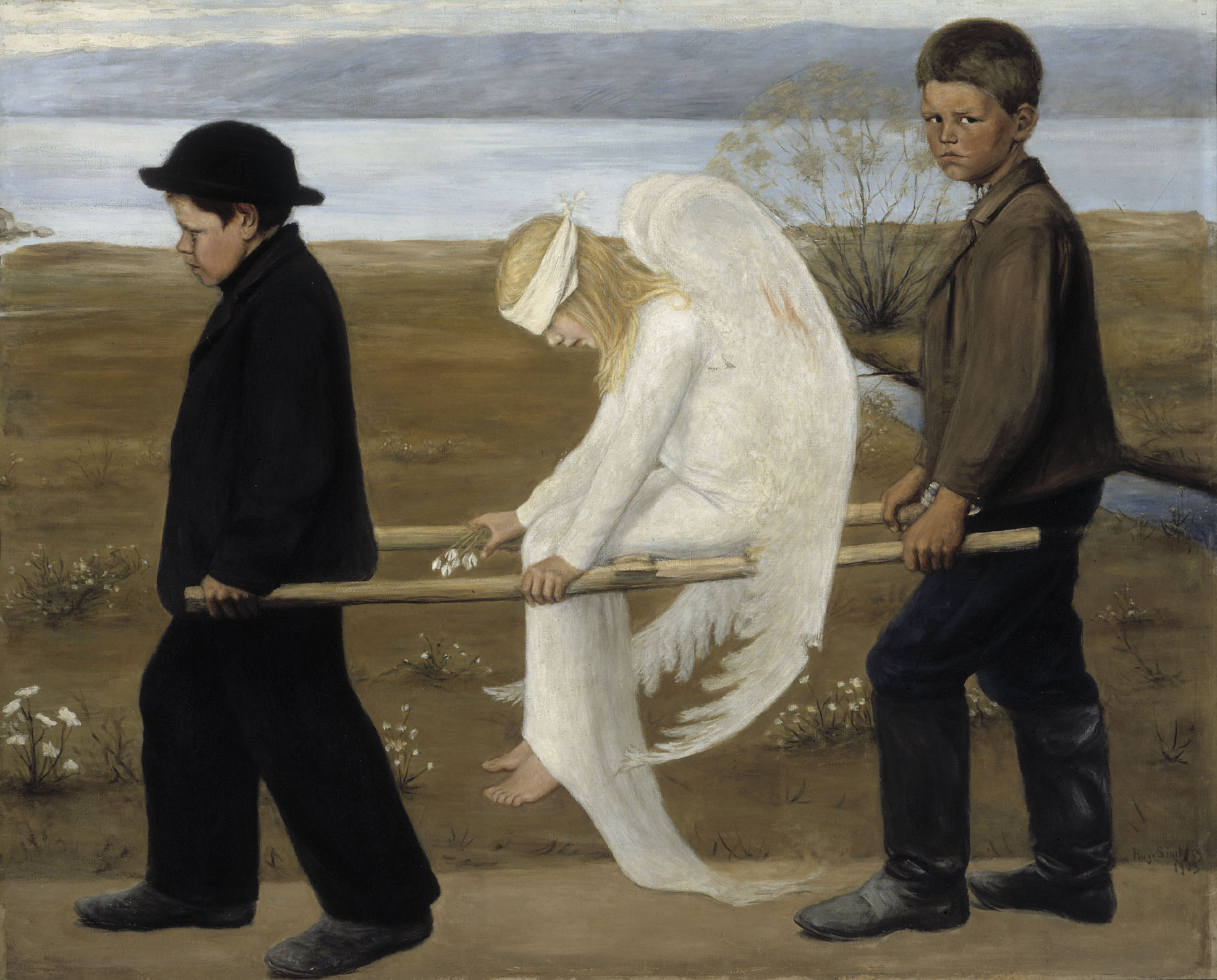
The original title of the painting reproduced on the book’s cover is *Haavoittunut enkeli* (1903), a work by the Finnish Symbolist painter Hugo Simberg (the English title is *The Wounded Angel*). The second image below shows Jake Angeli in his ‘masquerade’, which bore little resemblance to a carnival during the storming of Capitol Hill by fanatical supporters of Donald Trump on 6 January 2021.
Contact the author
The essay on tribalism consists of two parts. The first part deals with the biological, psychological and social origins of the delicate balance between cooperation and the abuse of power in human relationships, and the second part sets out an ethical, cultural and political proposal to promote universal tolerance and democracy through mutual altruism. The second part sets out an ethical, cultural, and political proposal to promote universal tolerance and democracy through mutual altruism.
If you would like to contact the author, please send a message to: [email protected].