


Health promotion is addressed by analysing the epistemological foundations of the biomedical model upon which the current ‘orthodoxy’ of medicine is based, as well as the model of health promotion that originated at the ‘First International Conference on Health Promotion’ in Ottawa, Canada, from 7 to 21 November 1986.
The study proposes a wide range of ‘interdependent learning objectives’, serves as a call for a necessary paradigm shift and offers tools for designing and implementing concrete actions aimed at fostering good health. [I]
The aim is to devise a reformulated and/or reshaped epistemology of medicine based on an ethical and ecological foundation, and an analysis of indicators of patients’ enjoyment of the determinants of health and fulfilment of life needs. The following must be taken into account:
– the strengths and weaknesses of contemporary medical practice;
– the values and attitudes that must be incorporated into the training and practice of healthcare professionals, paying particular attention to teacher-learner and patient-therapist interactions;
– safeguarding and co-creating the ‘sources’ that sustain health;
– integrated processes of research, experimentation, information, education and training, aimed at building the knowledge base and practical guidelines necessary to promote health in living and working environments;
– methods for implementing programmes on sexual, relational/emotional, health and digital literacy;
– identifying and implementing validating technologies;
– establishing networks of facilities, physical and technological infrastructure, and competent practitioners, including those responsible for administrative functions, policy-making, or working on behalf of third-sector organisations, as well as ‘interest groups’ that contribute to the universal provision of healthcare services.
These ‘nodes’ constitute the parameters to be identified, studied, developed, monitored and refined by applying ‘network medicine’, which is based on the principle of the systemic interdependence of all its components.
Within this model, priority is given to continuous professional development and enhancing the specific skills required for healthcare professions.
I believe these can stem from an approach to vocational and university education for those involved which must: 1) draw on universal values that are clearly structured within an ethical and ecological framework;
2) focus on educating the entire population from early childhood onwards, with specialisations derived from acquiring and/or accumulating mastery over specific semiotic domains, multiple identities, empathic sensitivity, and empowering technologies;
3) be receptive to the hybridisation of the epistemologies conveyed by the so-called ‘hard sciences’ (physics, chemistry, genetics, mathematics, etc.), which together constitute the physicalist worldview, with those of the so-called ‘humanities’. These can be fruitfully complemented by certain traditional or ‘complementary’ psychophysical teachings and practices, which can be revived and valued according to the ‘benefit-oriented’ criterion (ex iuvantibus). With a view to validating transparent, reproducible and communicable reference frameworks and methods that make evidence of their applicability and effectiveness available (or accessible through prospective research), processes of peer review and self-regulation concerning healthy living must be designed and implemented by the academic community, authorised professionals, service users, patient organisations, policy-makers and implementers, as well as bodies responsible for ‘on-the-ground’ verification; 5) Replace quantitative methods for measuring healthcare performance, which are based on ‘cost-accounting’ and aimed at computing outputs (e.g. how many hip replacement operations are performed on people over the age of sixty in a year), with methods that enable the measurement of impacts and outcomes in terms of meeting people’s needs in their daily lives. These relate to: a) the effective implementation of the determinants of health and enjoyment of quality of life, which indicate outcomes (e.g. reduction in disability index among subjects studied for five consecutive years through hip replacement surgery); b) indices of maintenance and promotion of good health among citizens, in relation to human and economic resources invested.
From the perspective of living in health, a process of individual and social empowerment emerges. This refers to the willingness, on the part of each individual, particularly healthcare professionals, to participate in an informed, authoritative, trained, proactive, cohesive, engaging, cooperative, supportive and inclusive community, guided by participatory leadership and governed by a pragmatic, balanced policy directed towards the common good.
It is important to note that many of the issues related to health protection and promotion discussed in this essay are not addressed in the current curriculum or reflected in the knowledge and awareness of healthcare professionals, especially doctors.
The overarching goal of health promotion calls for renewed dialogue amongst the various groups involved. The level of civilisation we will achieve in the third millennium depends on whether the inconsistencies and inequalities observed today persist, or whether we experience the much-hoped-for paradigm shift.
Although it appears to be on its last legs, the economic and social system characterised by the features of the welfare state established in European countries may well be revitalised, provided that it becomes a political priority and is not hindered or nullified by rampant neoliberalism and neoconservatism.
However, the ‘multi-crisis’, the nationalist and authoritarian stranglehold preventing particularist interests from engaging in healthy internal and external dialogue centred on the dignity of all human beings and the nature that gives us life, and the imperialist wars and arms race fuelled by these developments, will make the world more complicated and insecure in the coming years. I have no hesitation in saying that a ‘revolution’ adopting the ‘demolition and reconstruction’ method often practised in construction will be necessary to overhaul the current economic and geopolitical model, and consequently the current management of ‘public’ and ‘private’ healthcare.
Whether the balance of power in the years to come will tip in a direction that improves or worsens the quality of life and social progress of the majority of the world’s population – and therefore also yours, as you read these lines – depends on whether the global population’s awareness of principles of equity and solidarity grows, or conversely, whether predatory tribalism intensifies.
History has taught us that achieving positive outcomes is linked to radical transformation.
It would be an extraordinary development if these were fuelled today by innovative approaches that work through the education and mobilisation of ever-increasing numbers of informed citizens who are trained to think critically, communicate simply and honestly, share clear explanations and credible data, and make creative use of the ‘information society’. These citizens would be able to anticipate and measure economic and socio-health impacts and make important decisions on unifying issues such as good individual and ‘public’ health, as well as the suffering caused by poor health.
It is well known that the problem is linked to ‘profit maximisation’, consumerist pressure fuelled by technocracy, the privatisation of ‘human capital’ and a political system incapable of upholding the common good. This approach cannot be realised through the emergency implementation of urgent measures, given that these are generally implemented on the basis of a low level of institutional preparedness for such events whilst being fuelled by ignorance, indolence, intolerance, conflicts of interest, abuse of power, and opposition to evidence-based data. Conversely, the population’s low levels of digital, health and sexual/emotional literacy hinder the development of positive processes, encouraging the manipulation of information and ideological, religious and technological domination of the masses.
The analytical tools proposed here help to understand and develop the systemic dimension and the bio-psycho-social and environmental dynamics of health promotion, according to an original framework. This framework is based on three key elements; a) Ethics defines values and influences medicine through bioethics and the deontology of healthcare professionals. It also shapes the moral values of society as a whole and influences individual behaviour and political choices; b) A brief introduction to the philosophy of science and the recent history of medicine underpins the contemporary expression of its epistemology. This involves examining its logical criteria, experimental methods and the perspective offered by the cognitive sciences (including philosophy, psychology, neuroscience, anthropology, linguistics and artificial intelligence), as well as the information and communication sciences, sociology, the medical humanities and the use of digital technologies; c) All these elements offer the opportunity to foster individual and social empowerment. political participation, with a view to living in health. [II]
Although it may seem obvious, it is worth reiterating that the concept of health promotion has, in a sense, been handed down to us from traditions dating back to Hippocratic medicine. [III] This tradition attributed much of the therapeutic potential to diet and lifestyle moderation for those in need of care. In the pre-scientific era, when frameworks and methods for providing evidence of pathophysiological mechanisms were unavailable, knowledge of logic and philosophical tradition was essential for practising medicine.
Upon closer inspection, society has not only assigned medicine the task of addressing the health problems of the individual since prehistoric times, but also safeguarding their existence.
However, strategies for survival and liberation from existential anguish do not encompass the full range of experiences that accompany human evolution. Medicine has also drawn upon the ability to project one’s existence into a ‘life plan’ that encompasses imagination, beliefs, rituals, knowledge, and concrete actions to counter or mitigate adverse natural events, as well as to ‘give meaning’ – including a metaphysical one – to life’s contingencies.
Furthermore, medicine has been called upon to address unsolvable enigmas more or less directly, such as: ‘Who am I?’, ‘Why am I here and now?’, ‘Why have I fallen ill?’ and ‘What does “healing” mean?’
Starting with the definition of miraculous identities such as kings, queens, priests, shamans, healers and sorceresses – representatives of divine power – medicine has taken on the task of ‘telling the story’ to the community, constructing a ‘reality’ that has fuelled strategies for coping with the fear of death.
Unfortunately, many doctors today overlook this power, especially those who equate the art of healing with cutting-edge technology. It has become one of the many specialisms offered by university departments under the heading of ‘narrative medicine’ and awaits keen readers on bookshop shelves.
In my view, what matters in health promotion is the need for a ‘narrative’ that seeks to give meaning to the ‘manifestations’ often associated with suffering and which constitute the signs and symptoms of ill health. These rely on the social context to be understood and, ideally, addressed with effective remedies within the limits set by the therapist’s expertise, tradition, and available resources.
Clearly, the humanities must reclaim semiotic fields to create fertile ground on which scientific thought can flourish and evolve intellectually.
Thus, they emerge as the catalyst for a cognitive, emotional and pragmatic process capable of becoming the instrument and technology of an ‘augmented reality’, ‘tempered’ by inherited wisdom. This process aims to enhance the ability of scholars and ordinary people alike to master critical and self-critical thinking, freeing them—within the limits of empirical knowledge—from dogmas and misleading metaphysical theories.
To achieve this objective, it is beneficial to take an approach based on verifiable learning models. These are organised in such a way as to consolidate pedagogical processes, teaching methods, topics for reflection and active practice, particularly those found within the liberal arts, including contemporary developments.
According to this growing trend, what matters is that healthcare professionals acquire the knowledge and skills derived from the ‘ability to think about how one thinks’, ‘learning to learn’ and interpreting what one ‘intimately feels’ (known as ‘thinking about thinking and emotion’ in English; the technical term is ‘metacognition’), as well as understanding the significance of professional virtues.
This approach is not due to carelessness or naivety, but to the acceptance of a sort of compromise with reality, heralding an ’empirical’, ‘utilitarian’ and ‘pragmatic’ approach in medicine. This is because a medical intervention acts upon an open system. The interpretative models we possess of vital functions and their fluctuations are approximations or cognitive shortcuts of the complex phenomena that sustain the organism’s life. There are no ‘truths’ from which to deduce consequences, but at best abductive reasoning can be employed, which is essentially an inference to the best explanation.
Complexity eludes us and only a few phenomena are well enough understood to allow quantitative measurements that pave the way for deterministic modelling and objective assessments. While this gap is relatively small compared to centuries ago, it is immeasurably vast in relation to the hoped-for advancement of knowledge regarding natural phenomena. It requires culture, sensitivity, experience, creativity and ‘lateral thinking’.
In this regard, it is important to distinguish between the ‘personalisation’ of treatments that can be achieved through genetic testing (so-called precision medicine, which is expected to lead to significant improvements in diagnosis and treatment) and that which can be achieved through a reassessment of the therapist’s role, expressed in the act of ‘caring’. This is primarily manifested in the doctor–patient relationship as time spent caring, in the provision of social and healthcare services relating to integrated medicine, and in the medical or surgical care of paediatric, chronically ill, elderly, and terminally ill patients receiving palliative care.
Taking an approach based on verifiable learning models is beneficial to achieving this objective. These are organised in such a way as to consolidate pedagogical processes, teaching methods, topics for reflection, and active practice — particularly those found within the liberal arts, including contemporary developments.
According to this growing trend, it is important for healthcare professionals to acquire knowledge and skills derived from ‘thinking about how one thinks’, ‘learning to learn’, and interpreting what one ‘intimately feels’ (known as ‘thinking about thinking and emotion’ or ‘metacognition’). It is also important for them to understand the significance of professional virtues.
This approach is not the result of carelessness or naivety, but rather an acceptance of a kind of compromise with reality. It heralds an ’empirical’, ‘utilitarian’ and ‘pragmatic’ approach to medicine. This is because medical interventions act upon open systems. The interpretative models we have of vital functions and their fluctuations are approximations or cognitive shortcuts of the complex phenomena that sustain life in organisms. There are no ‘truths’ from which to deduce consequences, only abductive reasoning, which is an inference to the best explanation.
Complexity eludes us and only a few phenomena are understood well enough to allow quantitative measurements that pave the way for deterministic modelling and objective assessment. While this gap is relatively small compared to centuries ago, it is immeasurably vast in terms of the advancement of our knowledge of natural phenomena. This requires culture, sensitivity, experience, creativity, and ‘lateral thinking’.
In this regard, it is important to distinguish between the ‘personalisation’ of treatments that can be achieved through genetic testing (so-called precision medicine, from which far-reaching improvements in diagnosis and treatment are expected) and that which can be achieved through a reassessment of the therapist’s role in ‘caring’. This is primarily manifested in the doctor–patient relationship and in social and healthcare services relating to integrated medicine. It is also evident in the medical or surgical care of paediatric, chronically ill, elderly and terminally ill patients receiving palliative care.
For this reason, given that the framework through which the scientific community implements processes of health protection and promotion is based on evidence, I cannot help but envisage a multidisciplinary epistemology that I would call ‘fusion’, given that cross-fertilisation, free from the friction of ‘schools of thought’, is becoming increasingly widespread across many fields. In my view, this development offers cause for optimism.
Perhaps the term ‘fusion’ does not sit well with many philosophers or scientists who are committed to creating categories and tools of knowledge that occupy disciplinary frameworks rooted in Cartesian and positivist thought, as well as the academic power of ossified hierarchies. Nevertheless, I seek to circumvent these obstacles by arguing that philosophy, the arts, science, the worship of the ‘sacred’ and traditional health-promoting practices can work synergistically with the biomedical model to provide a new perspective on healthcare professions, with the aim of creating conditions that promote healthy living, or at least disseminating knowledge, skills and technologies that can achieve this in qualitative and quantitative terms.
The important thing is to distinguish between the tools one intends to use to influence health outcomes in order to identify those best suited to addressing each specific situation.
This line of reasoning also clarifies how I concluded that the work presented here should be realised through integrating ‘a little of everything’ in the right proportions. I hope this proves adequate for both careful individual understanding and the development of skills among research and healthcare professionals.
The idea of reshaping medicine does not require exhaustive preambles or ‘reinventing the wheel’, provided that, following a thorough examination, it is deemed to be a process underpinned by an urgent ethical necessity and a logically sound endeavour, at least in terms of designing interventions that can be carried out by interconnected individuals.
This clarification is necessary as articles in the specialist literature tend to focus primarily on analyses and research concerning the organisational aspects of healthcare systems provided by service providers.
It is disappointing to have to state the obvious, but medicine – regardless of what is touted and the extraordinary progress it has made over the last century – is a discipline practised within a framework of empirical approximation and uncertainty, which is, at best, an art.
If it is true that, even in this context, ‘the whole is greater than the sum of its parts’, then health promotion can be seen as the organisation of processes that guide people towards a ‘safe haven’, even if ‘salvation’ remains beyond its reach.
The sources consulted are listed in the text’s footnotes, but this is only a limited selection, and I am grateful to all the authors and publishers, whether acknowledged or not. I am particularly grateful to those who adhere to transparent impartiality criteria and freely disseminate their ideas and research results. In other words, I thank them because this study would have been unthinkable for a single researcher even twenty years ago when the proactive approach of authors of Wikipedia articles, indexed scientific texts and full versions of Enlightenment works, which are now easily and freely accessible online, were still in their infancy.
I am therefore aware of the grave danger that restrictions on freedom of research and information, and on the universal right to health, imposed in a context of big tech deregulation, may reduce the resources allocated to fostering what Roy Porter calls ‘the greatest benefit to humanity’. [IV]
I am also convinced that, in the coming decades, culture and the knowledge necessary for healthy living will be transmitted through accessible and immersive means, whether our leaders like it or not. These means will draw on advances in our understanding of learning processes and validating technologies within an innovative professional and technological context. Examples include the pedagogically advanced use of ‘serious’ video games and the creation of concrete scenarios for network medicine that can be developed by independent organisations, such as NGOs.
The challenge we face today and tomorrow is linked to the proportion of the population that will be able to participate in this revolution.
I conclude with the realisation that this study only describes a work programme and ‘case studies’, whereas I have not been able to link the proposed health promotion model to the following: a detailed description of each intervention; an experience that can be translated into concrete actions; a mathematically sound formulation of the proposed system; a pilot project In other words, there is a lack of applications that would enable us to evaluate or make predictions about whether the formulated hypotheses and set-out theories will function correctly.
It will therefore be necessary to pay attention to the themes I have developed and to encourage the widest possible participation in order to demonstrate their effectiveness.
Contents
Author’s Note
Introduction and Work Plan
Part One
Chapter 1 An ethical and ecological ap-proach to contemporary medicine
1.2 The History of a utopia
1.3. A digression on what the recent his-tory of medicine teaches us
1.4 Something has gone wrong with one of humanity’s greatest creations
1.4.1 Risk factors and the commodifica-tion of illness
Part Two
Chapter 2 The phenomenology of health, illness and death
2.1 The normal and the pathological
2.2 The grieving process
2.3 The natural history of the unmention-able: poo
2.4 General principles for a healthy diet
2.4.1 Introduction
2.4.2 The static biothermodynamic con-cept of a healthy diet
2.4.4 The microbiota: a guest we cannot do without
2.4.5 The Informative and germinative concept of the ‘holy’ diet
2.6 General principles for healthy physical activity
2.6.1 How to live in tune with chronobiology
2.7 Medical semiotics
2.8 Epistemologies underpinning a different approach to medical semeiotics
2.9 Placebo effects
Chapter 3 Evidence-based medicine (EBM)
Chapter 4 Psychosomatic medicine: a ‘more holistic’ approach within the bio-medical model
Chapter 5 Love, pleasure and ecstasy
5.1 Taoist sexual practices
5.2 Kāma and the Kāma Sutra
5.3 Sexual pleasure
5.4 The orgasm
Part Three
Chapter 6 Theory and model of health promotion
6.1 The conceptual foundations under-pinning health promotion
Chapter 7 Why we cannot do without the doctor-patient relationship of trust
7.1 Gregory House’s eccentricity and his belief that ‘everyone lies’
Chapter 8 The health promotion para-digm for reshaping medicine
Chapter 9 Empowerment as a driving force for change
9.1 The practice of empowerment
Chapter 10: Reflections on health promotion in the age of the Coronavirus pandemic
Chapter 11: Relationship models and skills in the social practice of patient organisations
Chapter 12: The revival and contemporary reinterpretation of certain health practices of eastern origin
Part Four
Chapter 13: The strategic vision for reshaping medicine
13.1: What health promotion is and what it aims to achieve can be gleaned from the context.
Chapter 14: What digital, sexual, relational/emotional and health literacy mean, and who they are aimed at.
Chapter 15: Value-based healthcare delivery systems.
Chapter 16: Virtue ethics and the theory of values in medicine.
Chapter 17: Integrated healthcare.
Chapter 18: Back to the future: the horizon of the humanities as an ethical and ecological context for medicine
18.1 Introduction
18.2 Situated cognition and collaborative teaching
18.3 Humanistic education and the liberal arts
18.4 The liberal arts and the humanities in medicine
18.5 The landscape in which healthcare professionals are trained in the digital age
18.6 Semiotic domains of the healthcare professional
18.7 The contribution of digital technologies to the medical humanities
Chapter 19: Artificial intelligence in the service of health promotion
Chapter 20: Video games from a pedagogical perspective
20.1: Educational and instructional uses and training methods achievable with the aid of video games
Chapter 21: The promised land of ‘e-health’ and ‘telemedicine’
Chapter 22: A systemic, evolved and coherent conception of network medicine
Notes
[I]Also by this author: Leopardi: Master of Life: Ricerche & Redazioni. Teramo, 2026; Tribalism is currently under review and comprises two parts entitled Bio-psycho-social and ecological origins of the delicate balance between cooperation and abuse of power in human relationships and An ethical, cultural and political proposal to promote universal tolerance and democracy through mutual altruism. A new edition of the essay Practising impermanence to attain freedom: the search for an ethical and ecological approach to the fear of death is also planned. The first version was published by Il Filo di Arianna in 2021. The introductions to the essays can be found on the page at the following URL: https://www.archasalutis.it/libri/.
[II] My thesis is that the ethical climate that underpins the core values of education, clinical practice and research in medicine has a radical influence on epistemology in this field. The values and tools of knowledge take on meaning and form a coherent system when they work together to define how every human being can realise their potential in order to rise, at least in part, above ignorance and suffering. I therefore propose the concept of ‘situated medicine’, which resonates like a musical instrument in a symphony, for those who seek to derive the greatest possible ethical and aesthetic benefits from performing or being drawn into its performance.
[III]I should point out that, in this study, health promotion and salutogenesis are considered synonymous, even though some schools of thought maintain that the two models are distinct.
[IV] In this way, I adopt the title of Roy Porter’s book: *The Greatest Benefit to Mankind: A Medical History of Humanity*. WW Norton & Co (1999).
Discovering the New World was a very difficult undertaking, as we all know. But even more difficult, once the New World had been discovered, was ‘seeing’ it, realising that it was ‘new’ – entirely new, different from anything we had ever expected to find that was new. And the question that naturally springs to mind is: if a New World were discovered now, would we be able to see it? Would we be able to set aside all the images we are accustomed to associating with the expectation of a world different fr , in order to grasp the true diversity that would present itself to our eyes?
Italo Calvino, commenting on the exhibition ‘America as Seen from Europe’.
Author’s note
This essay concludes the trilogy in which I have set out a theory of living in heath. I have critically examined the arguments that provide a broad basis for reflecting on the theories and facts to be analysed, the strengths and weaknesses of my proposal, and how to define an individual and political perspective on the subject.
The first essay I published analyses the process of self-education evident in the study of Giacomo Leopardi’s life, relationships and works. Together with the process of self-education he undertook while confronting suffering and the fear of death, these lead me to regard the poet-philosopher from Recanati as a ‘Master of Life’.
The second topic in the trilogy is tribalism, which is explored in two complementary parts. The first part is subtitled ‘The bio-psycho-social and ecological origins of the delicate balance between cooperation and abuse of power in human relationships’; the second part is entitled ‘An ethical, cultural and political proposal to promote universal tolerance and democracy through mutual altruism’.
In my view, promoting health is the ultimate aspiration that should guide a civilisation in which we all possess equal dignity as members of the human race, whilst respecting our individual differences. The text is structured around a discussion which, while not exhaustive, is sufficient to explain how it is possible to construct a new and promising ‘grand narrative’ in an era of overwhelming information flows and chaotic ‘storytelling’ and ‘infodemic’. This narrative expresses our capacity to be and act humanely, taking concrete form in our care for ourselves, others, and our wonderful planet.
Enjoy the read!
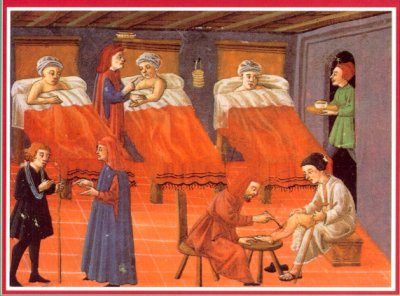
The engraving depicts doctors and their patients at the 11th–12th century Salerno School of Medicine. Attribution: public domain. The image can be found at the following URL: https://commons.wikimedia.org/wiki/File:Scuola_medica_2.jpg

Contact the author
The objective of promoting health is addressed by analysing the epistemological foundations of the biomedical model , as well as the model of health promotion that originated at the ‘First International Conference on Health Promotion’ in Ottawa, Canada, from 7 to 21 November 1986.
If you would like to contact the author, please write to: [email protected]